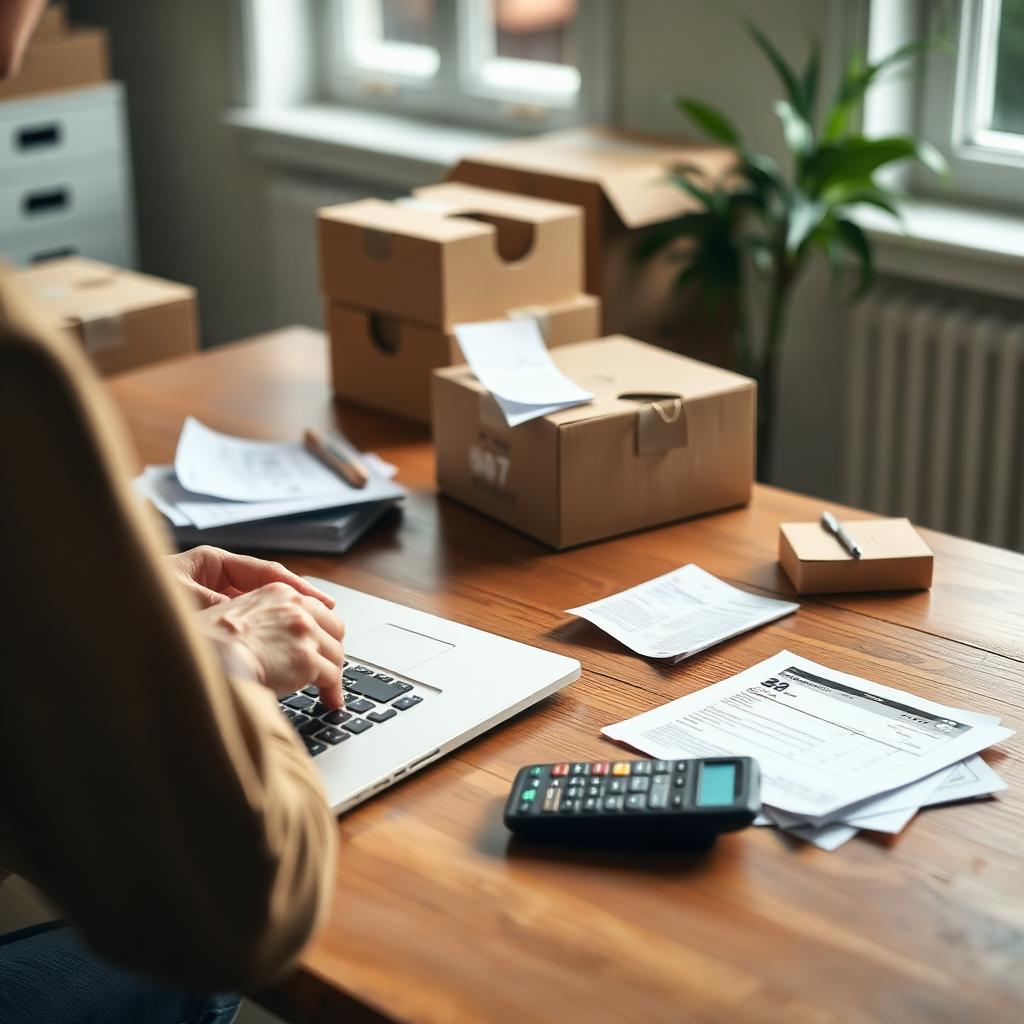
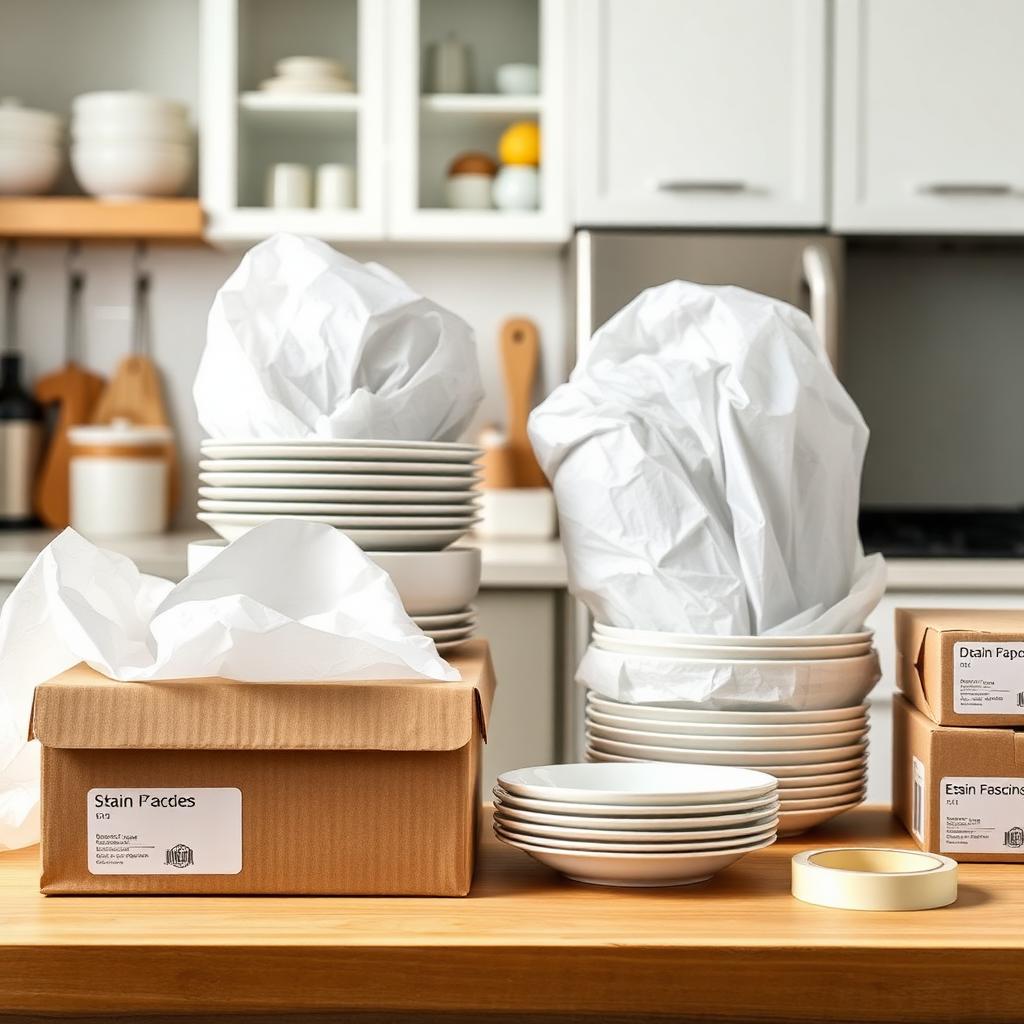
Packing is 80% of the actual work of a move, and it's the part most people underestimate. Loading a truck is fast when the boxes are packed well. It's a nightmare when the boxes are half-full, mislabeled, and unable to stack. This is the same room-by-room order and technique our professional packers use every day. Follow it and your move will feel dramatically easier — for you and for whoever you hire to move you.
Before we dive in, three universal rules that apply to every room.
The three universal packing rules
Rule 1: heavy stuff in small boxes, light stuff in big boxes. This sounds obvious but almost everyone gets it wrong at first. Books, canned goods, and tools go in 1.5 cubic foot 'book boxes.' Bedding, pillows, and lampshades go in 4.5 cubic foot 'large boxes.' A big box full of books is unliftable and will bust open at the bottom; a small box full of pillows is a waste of a box.
Rule 2: label the top and one side, with room and contents. 'KITCHEN — glassware — FRAGILE' on the top and the side. When your movers stack boxes eight high in a room, only the side labels are readable. Skip this step and your move-in will be a scavenger hunt.
Rule 3: fill every box to the top. A box that's half-full will crush when another box is stacked on it. If you run out of stuff, fill the top with packing paper, towels, or clothing to give the box structural integrity. Every professional packer does this.
Order of operations
Pack the least-used rooms first. That's usually the garage, guest bedrooms, attics, basements, and formal dining rooms. Save the kitchen and the primary bedroom for last — you need to eat and sleep during the pack. A typical timeline for a 3-bedroom home is 2–3 weeks of evenings-and-weekends packing, working from the storage rooms in toward the daily-use rooms.
The garage: start here, thank yourself later
The garage is almost always the room that gets underestimated. What looks like a small collection of tools and holiday decor turns out to be twelve boxes. Start here at least three weekends before move day.
For hand tools, use small book boxes. Line the bottom with a moving blanket or old towel to absorb sharp edges. Wrap anything with a blade (saws, chisels) in cardboard or bubble wrap. Power tools should go back into their original cases if you kept them, or into individual small boxes with packing paper. Drain any gas-powered equipment (mowers, blowers, snowblowers) before move day — no professional mover will transport them full, and neither should you.
Holiday decor gets its own labeled boxes so you can find them fast on the other side. Christmas ornaments deserve dish-pack quality boxes and individual wrapping; they don't survive being tossed into a general 'holiday' box.
The sharps drawer of the garage — screws, nails, small hardware — deserves a specific tip. Empty each little bin into a labeled zip-lock, then put all the zip-locks in one small box. You'll be able to set up the workshop in the new garage in an afternoon instead of a weekend.
The kitchen: where dishes go to break (or don't)
The kitchen is the most fragile and most complex room in the house, and it should get the majority of your packing attention. Use dish-pack boxes — these are double-walled and rated for fragile items. Regular small boxes will not protect glassware and plates on a moving truck.
For plates: stack them vertically, on their edge, like records in a crate. Wrap each plate individually in two full sheets of packing paper. Vertical stacking distributes weight evenly and dramatically reduces breakage versus stacking flat.
For glassware: wrap each glass in three sheets of paper, twisting the paper into the mouth of the glass to fill the interior. Pack glasses upside-down in the box. Nest smaller glasses inside larger ones only if both are wrapped.
For pots, pans, and small appliances: these can go in medium boxes. Nest lids inside pots, wrap each pot in a single sheet of paper to prevent scratching, and fill gaps with kitchen towels or dish towels — double-duty use of items you have to pack anyway.
For pantry items: pack canned and boxed goods in book boxes. Discard anything expired or half-open (opened flour, opened rice, opened chip bags become moth invitations in transit). Refrigerated items should be eaten down in the two weeks before the move; whatever's left transfers to a cooler on move day.
Knives get their own treatment. Wrap the blade in cardboard, tape it in place, and mark the outside of the wrap 'KNIFE.' Never toss loose knives in a box. Every packing crew has a knife-injury story and it's always avoidable.
The bedrooms: fast if you're organized
Bedrooms are, on average, the fastest rooms in the house to pack, because most of the volume is soft goods (clothing, bedding) that pack quickly.
For hanging clothes, use wardrobe boxes. These have a bar across the top; you literally lift the clothes on their hangers from your closet to the box, no folding. Wardrobe boxes seem expensive per unit but they save so much time on both ends of the move that they always earn their price back.
For dresser clothes, don't bother emptying dressers unless the drawers are removable and the piece is genuinely heavy or old. Modern dressers travel fine with clothes still in the drawers — just tape the drawers shut with painter's tape (not packing tape, which can pull off finish). This is a huge time saver most people don't realize is allowed.
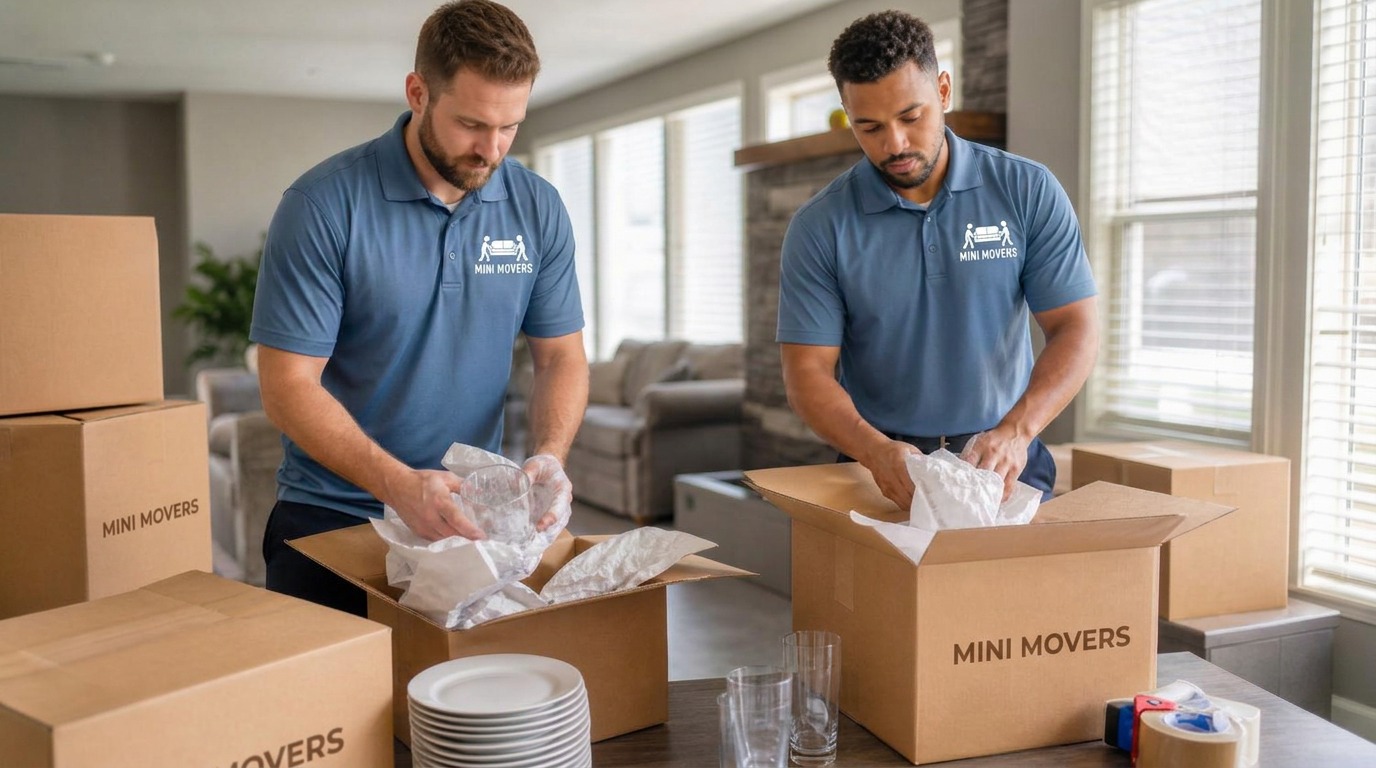
For bedding, use large boxes. Wash sheets and duvet covers so you can put them on the bed at the new house immediately. Vacuum-seal bags for out-of-season bedding save 60% of the space and are especially useful in a compact truck load.
For nightstand contents — chargers, books, medication, jewelry — pack a personal bag that stays with you, not on the truck. This is the single most-forgotten step and it's the reason people arrive at a new home with no phone charger.
The living room: fragile is the theme
Living rooms have fewer items than bedrooms but more expensive ones. TVs, electronics, art, lamps, and glass tabletops all live here and all need specific handling.
TVs: use a TV box (a corrugated slab with foam corner protection). The original box is best if you kept it. Never lay a flat-screen TV flat during transport — always upright, ideally in a box, always in a slot in the truck where nothing can shift into it.
Lamps: remove the shade and pack the shade in its own box with nothing else. Shades crush under any weight at all. Wrap the lamp base in a blanket, pack in a medium box with paper filler.
Framed art: use picture boxes (adjustable-size flat boxes designed for artwork). Wrap the piece in glassine or a soft cloth first, then bubble wrap, then into the box. If you don't have picture boxes, sandwich the piece between two pieces of cardboard cut to size and tape thoroughly.
Electronics (stereos, gaming consoles, routers): photograph the cable configuration before you disconnect. Bag the cables together and tape them to the back of the corresponding device. This saves 30–60 minutes of setup time at the new place.
Furniture: this is where a mover earns its keep. Sofas need to be wrapped in shrink wrap and moving blankets, corners protected, and often disassembled if the piece has removable legs. Coffee tables and end tables should have their legs removed if possible and be wrapped individually. This is not a DIY-friendly category for expensive pieces.
The bathroom: quick but sneaky
Bathrooms feel small but hide a surprising volume of stuff. Use small boxes; anything from a bathroom is heavier than it looks in aggregate (bottles of liquid especially).
For liquids — shampoos, lotions, cleaning supplies — put each bottle in a zip-lock, seal it, then pack. Every professional packer has seen a shampoo bottle open in transit and destroy a box of towels. The zip-lock is a 10-second insurance policy.
For medications, prescription bottles, and important toiletries, pack a 'first night' bag that stays with you, not on the truck. Even if the entire rest of the bathroom takes three days to unpack, you can shower and brush your teeth night one.
The home office: back it up first
The most important step in packing a home office happens before any box gets touched: back up every important file on every computer. Cloud backup, external drive, whatever. Movers are careful with electronics, but a hard drive that gets bumped hard can fail — and 'my files are gone' is a special kind of disaster.
For computers, use original boxes if you have them. If not, use small dish-pack boxes with generous paper padding, and pack laptops in their own individual boxes rather than nested with anything else.
For paper files, use file boxes (they're 1.5 cubic feet and designed to fit hanging folders directly). Photograph any critical documents before you pack them, so if a box is genuinely lost you have a scan of the important stuff.
The last day: the 'open first' box
Whatever you do, pack an 'open first' box (or bag) that contains everything you need for your first 24 hours in the new house: coffee maker, coffee, two mugs, toilet paper, a phone charger for every device, basic tools (scissors, screwdriver, tape measure), a set of sheets and pillowcases for one bed, and enough plates, forks, and glasses for the family to eat one meal. Label this box in ALL CAPS on every side, and either take it in your car or make sure it's the last thing loaded and the first thing unloaded.
This one box separates a 'we lived out of takeout for four days' move from a 'we made coffee in our new kitchen the next morning' move. Every pro packer has this on the checklist. It's the small thing that changes the entire feel of the first week.
When to call the pros
If any of the above sounds like more than you have time or energy for, that's what full-service packing is for. Our crews pack a typical 3-bedroom home in one to two days, and they do it with better materials and technique than a DIY pack will match. It's not free — but the trade-off between the cost of packing labor and the cost of the weekends you'd otherwise spend, plus the risk of breakage, usually pencils out better than people expect. Ask us for a packing-only quote and compare.
Planning a move in Sioux Falls?
Get a free written quote in under an hour — no phone tag, no pressure.
Get a free quote